

 By
By Introduction
Breaking into India’s beverage market is no small feat. With global giants dominating shelves and advertising channels, most new brands struggle to even get noticed. Yet, one brand managed to do exactly that without trying to outspend or outshout the competition.
Paper Boat chose a completely different path. Instead of competing on price, ingredients or flashy campaigns, it focused on something far more powerful emotion. More specifically, nostalgia.
This case study explores how Paper Boat built a strong brand by reconnecting people with memories they didn’t even realize they missed.
The Origin of Paper Boat
Paper Boat was launched in 2013 by Hector Beverages with a simple but thoughtful idea: bring back traditional Indian drinks in a modern, convenient format.
At a time when the market was flooded with carbonated drinks and packaged juices, paper boat introduced flavors that felt familiar and deeply rooted in Indian households. These included:
- Aam Panna
- Jaljeera
- Kokum
- Jamun
These were not new products. In fact, they were quite the opposite. They were drinks most people had grown up with but rarely found in ready-to-drink packaging. That insight became the foundation of the brand.
Identifying a Clear Market Gap
Before Paper Boat entered the scene, the beverage market was largely divided into two categories:
- Carbonated soft drinks
- Packaged fruit juices
What was missing was an organized segment for traditional Indian beverages. Paper Boat identified this gap and turned it into an opportunity. Instead of competing in crowded categories, it created its own space ethnic ready-to-drink beverages.
This move allowed the brand to stand out immediately and avoid direct competition with established players. It is a classic example of category creation done right.
The Core Strategy: Selling Nostalgia
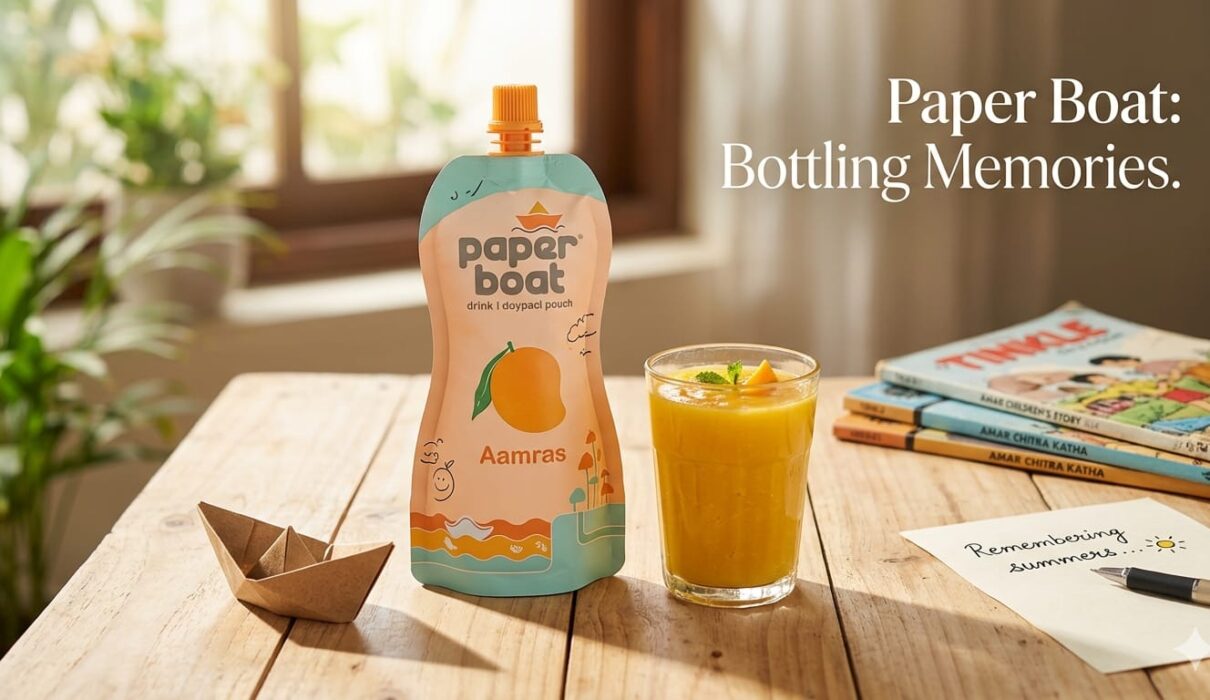
At the heart of Paper Boat’s success lies its emotional positioning. The brand does not just sell drinks, it sells memories.
Its messaging revolves around the idea of “Drinks and Memories,” tapping into emotions like:
- Childhood summer vacations
- Playing in the rain
- Time spent with family
- Simpler, slower moments in life
Instead of highlighting product features or nutritional benefits, Paper Boat focuses on storytelling. This creates a deeper connection with consumers, making the brand more memorable than those relying purely on functional messaging. In a market driven by features and discounts, this emotional approach feels refreshingly different.
Packaging That Speaks for the Brand
One of the most distinctive aspects of Paper Boat is its packaging. The brand uses soft pouches instead of traditional bottles or cans. The shape subtly resembles a paper boat, reinforcing the brand name in a clever, visual way.
The design elements include:
- Minimalist layouts
- Soft, calming colors
- Hand-drawn illustrations
- Clean and simple typography
This packaging does more than just hold the product. It tells a story. On a crowded shelf, it immediately stands out and communicates the brand’s personality without saying a word.
A Digital-First Marketing Approach
Unlike many FMCG brands that rely heavily on television advertising, Paper Boat took a digital-first approach.
Its marketing strategy focuses on storytelling through:
- Short films
- Animated videos
- Social media content
Interestingly, most of this content is not directly promotional. Instead, it revolves around everyday life experiences and relatable moments. This makes the content more engaging and shareable. As a result, the brand has built a strong emotional presence online without excessive advertising spend.
Distribution and Market Penetration
Building a strong brand is only part of the equation. Availability plays an equally important role.
Paper Boat ensured wide reach through a multi-channel distribution strategy, including:
- Modern retail outlets
- Local kirana stores
- Airports and cafes
- E-commerce platforms
This approach made the product easily accessible, allowing curiosity to quickly turn into trial. Over time, this helped the brand expand across both urban and semi-urban markets.
Product Strategy and Authenticity
Another key factor behind Paper Boat’s growth is its commitment to authenticity.
The brand focuses on:
- Traditional recipes
- Real ingredients
- Local sourcing
This strengthens its positioning as a brand that respects Indian culture while offering modern convenience. Today’s consumers are more conscious about what they consume and Paper Boat aligns well with this shift.
Business Impact and Growth
Over the years, Paper Boat has evolved into one of India’s most recognizable beverage startups.
Its success highlights a few important truths:
- Strong branding can reduce dependence on heavy advertising
- Emotional connection drives repeat purchases
- Differentiation is often more effective than direct competition
The brand has also inspired many startups to explore culturally rooted and nostalgia-driven strategies.
Key Marketing Lessons
1. Emotional branding creates lasting impact
People may forget features, but they remember how a brand makes them feel.
2. Creating a new category is powerful
Instead of entering crowded markets, defining your own space can be more effective.
3. Packaging can drive growth
Design is not just visual appeal. It plays a crucial role in recognition and recall.
4. Storytelling builds deeper connections
Relatable stories stay in people’s minds longer than product claims.
5. Cultural relevance unlocks opportunities
Understanding local traditions and preferences can lead to strong differentiation.
Conclusion
Paper Boat’s journey is a strong reminder that branding is not just about visibility. It is about connection. By focusing on nostalgia, authenticity
and thoughtful design, the brand created something that goes beyond a product. Paper boat branding strategy built an emotional bond with its audience.
The biggest takeaway is simple yet powerful – People do not just buy products they buy memories, emotions and experiences and Paper Boat understood that better than most in the market.