
 By
By In the world of high-end fashion, most brands are fighting for your attention. Louis Vuitton is fighting for your respect.
While other labels chase “virality” or slash prices to move inventory, LV operates on a different plane of existence. They don’t have “sales,” they don’t do “clearance,” and they certainly don’t chase customers. Instead, they’ve engineered a $20+ billion empire by mastering the rarest commodity in marketing: The Art of Saying No.
By the end of this deep dive, you’ll understand why Louis Vuitton isn’t just a leather goods company—it’s a global masterclass in desire engineering.
Table of Contents
- The Heritage Foundation: From Travel Trunks to Global Status
- The Scarcity System: Why You’ll Never See an LV Sale
- Veblen Goods & Psychology: Why High Prices Drive Higher Demand
- The Store as a Sanctuary: Architecture, Art, and Aspiration
- Iconic Over Trendy: The Eternal Power of the Monogram
- The LVMH Flywheel: How to Protect Brand Equity at Scale
- Key Strategic Takeaways for Modern Brands
1. The Heritage Foundation: Roots in Luxury Travel
Louis Vuitton didn’t start with handbags. They started with utility for the elite. In the 1800s, travel was a luxury reserved for the 1%. By perfecting the stackable trunk, LV associated itself with the “Golden Age of Travel.”
- The Lesson: Every timeless brand needs a “founding myth” rooted in craftsmanship.
2. The Scarcity System: The “Anti-Marketing” Strategy
While Zara lives on speed, LV lives on absolute control. * No Discounts: LV famously never holds sales. If a product doesn’t sell, they would rather destroy it than discount it and dilute the brand.
- Closed Distribution: You can’t find a real LV bag at a wholesale department store. By owning every point of sale, they own 100% of the customer experience.
3. The Psychology of the Veblen Good
In standard economics, if the price goes up, demand goes down. In luxury, the opposite happens. Louis Vuitton is a Veblen Good—a product where high pricing is the feature. The price tag acts as a barrier that ensures only a certain “tribe” can enter, making the desire to join that tribe even stronger.
4. The Store as a Sanctuary
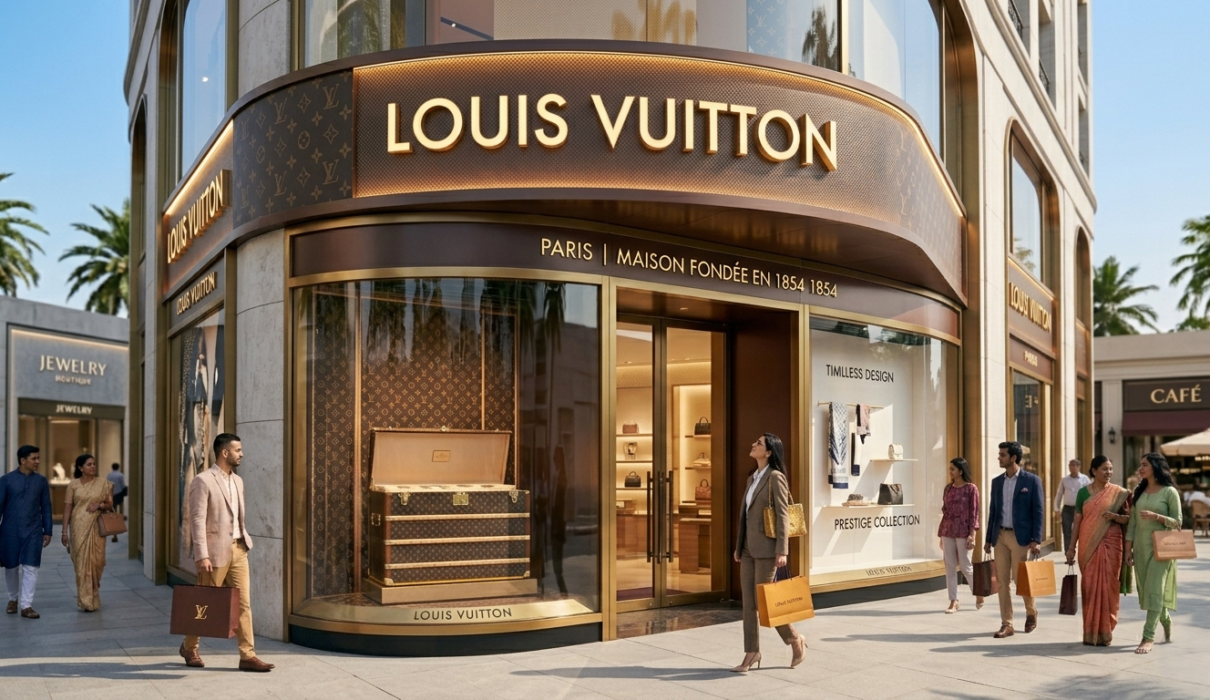
In the age of 1-click digital purchases, LV spends billions on massive “Maisons” in Paris and Tokyo.
- The Experience: These aren’t stores; they are temples. Between high-end art installations and white-glove service, the physical environment justifies the 10x markup.
5. Iconic Over Trendy: The Monogram Strategy
Fashion is temporary; icons are forever. While other brands chase “neon” or “oversized” seasonal fads, LV anchors its growth in the LV Monogram. * Brand Recall: The logo has moved past being a design—it is now a global shorthand for “Success.”
6. The LVMH Flywheel: Engineering Perception
| Phase | Action | Result |
| Heritage | Focus on 1854 origins | Unshakable Trust |
| Control | Zero Sales / Limited Drops | Intense Desire |
| Association | High-Profile Collaborations | Cultural Relevance |
| Exclusivity | Premium Pricing | Social Status |
Key Takeaways for Marketers & Founders
- Stop Discounting: If you want to be premium, you must protect your price point at all costs.
- Own the Channel: The more middlemen you have, the less “luxury” you feel.
- Sell the Feeling: Don’t talk about leather quality; talk about the legacy of the person carrying it.
Final Thought
Louis Vuitton didn’t win by being the “best” bag. They won by making the bag a symbol of achievement. They realized that in the end, luxury isn’t about what a product does—it’s about how it makes the owner feel.