

 By
By We’ve all been there. You walk into a Zara, see a jacket you love, tell yourself you’ll “think about it,” and when you come back three days later—it’s gone.
Most people think Zara’s success comes down to trendy clothes and low prices. But that’s only half the story. If it were that simple, every budget brand would be a billionaire.
The truth? Zara didn’t just change fashion; they rewrote the rules of business. They stopped trying to guess what we want and built a system that listens to what we’re actually doing. Here is how they built an empire by focusing on speed, data, and the “fear of missing out.”
1. The Death of the “Six-Month” Fashion Cycle
In the old world of fashion, brands were like fortune tellers. Designers would sit in a room, guess what would be “in” six months from now, and order millions of units from factories halfway across the globe.
The result? Huge piles of unsold clothes and massive “End of Season” sales just to clear the warehouse.
Zara flipped the script. Instead of predicting the future, they respond to the present.
- The 3-Week Rule: While competitors take months to get a sketch into a store, Zara does it in 21 days.
- Proximity is Power: By keeping a huge chunk of their manufacturing in Spain and Portugal (near their HQ), they can pivot on a dime.
The Human Take: Zara treats fashion like fresh bread—if it isn’t “hot” and new, it doesn’t belong on the shelf.
2. Your Local Zara Store is Actually a Data Lab
Ever wonder why you see a specific style of dress in Zara just weeks after it went viral on TikTok? It’s not magic; it’s data.
Zara store managers aren’t just there to fold clothes. They are the eyes and ears of the brand. They constantly feed information back to the “Cube” (Zara HQ) about:
- What customers are asking for in the fitting rooms.
- Which sleeve lengths people are complaining about.
- What colors people are actually reaching for.
Zara doesn’t follow “Trends”; they follow You.
3. The “Urgency” Engine (Why Zara Rarely Sales)
Zara has mastered the psychology of scarcity. Unlike other retailers that want to keep their bestsellers in stock forever, Zara purposefully limits production.
- The FOMO Effect: When you know a shirt might be gone tomorrow, you buy it today.
- Zero Inventory Stress: Because they produce in small batches, they rarely get stuck with thousands of unsold neon turtlenecks.
This is why you don’t see Zara running constant “50% Off” promos. They don’t need to. They’ve already sold out at full price.
4. The “Anti-Marketing” Marketing Strategy
Think about the last time you saw a Zara commercial on TV or a billboard. You probably haven’t.
Zara spends almost nothing on traditional advertising. Instead, they spend that money on:
- Prime Real Estate: They place stores next to luxury brands like Prada or Gucci. This makes you associate Zara with “High Fashion” without the high price tag.
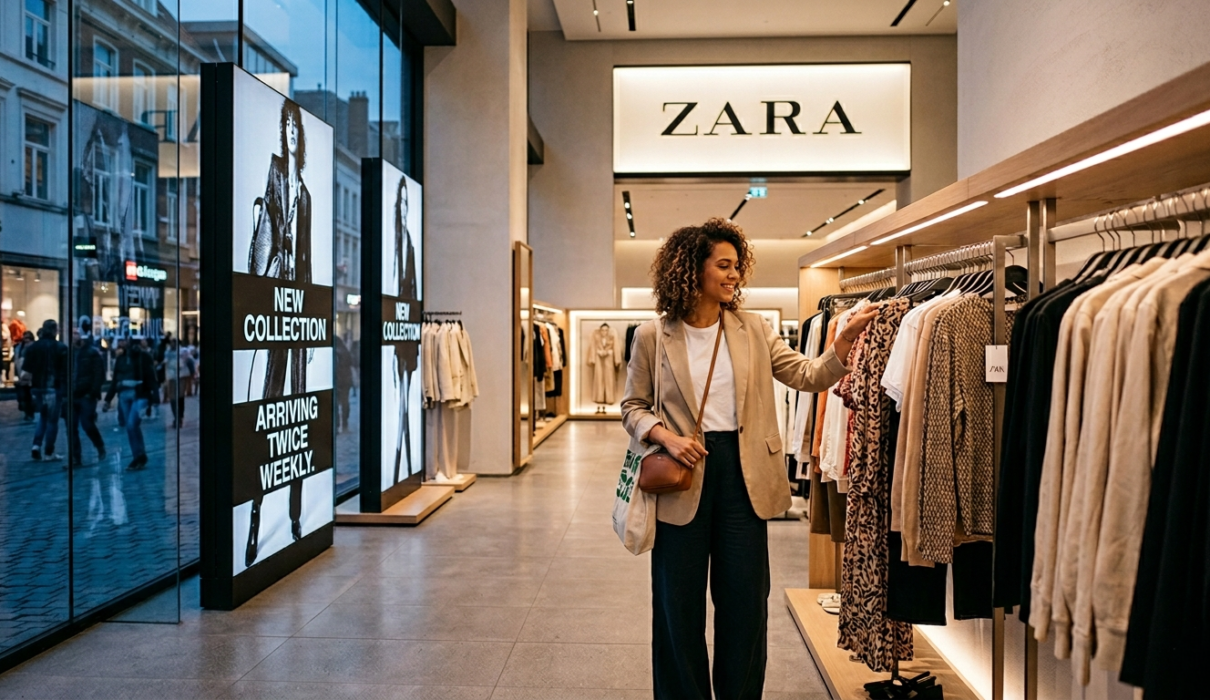
- The Window Display: Their windows are their billboards. They are updated constantly to reflect what’s happening right now.
5. The Zara Flywheel: How the Empire Scales
What makes Zara truly “un-copyable” is how all these pieces fit together into a loop:
- New Designs drop twice a week.
- Customers visit more often to see what’s new (average Zara customers visit 17 times a year vs. 4 times for other brands).
- More visits = More data.
- More data = Better designs.
- Better designs = Fewer discounts and higher profits.
The Takeaway: It’s Not About the Clothes
The biggest lesson from Zara? Speed beats prediction every single time. Whether you’re building a tech startup or a local bakery, Zara’s success offers a human truth: Listen to your customers, move fast, and don’t be afraid to change your mind.
Zara didn’t just build a clothing company; they built a responsive system that respects the pace of modern life. And in today’s world, being fast isn’t just an advantage—it’s a survival skill.